














Slotuna Casino Reviews In Italy

Practical overview for users in Italy: account, games, payments, support, and responsible gaming explained in 2026.

Fortune Gems 2 Slot

Table of Contents

  • The Dog House Megaways Slot
  • Lucky Joker 10 Extra Gifts Slot
  • Sword of Ares Slot
  • Floating Dragon Hold & Spin Slot
  • Leprechaun Riches Slot
  • Fruit Cocktail Slot
  • The Dog House Megaways Slot
  • Sword of Ares Slot
  • Fruit Million Slot
  • The Dog House Megaways Slot
  • Big Fisherman Slot
  • Big Fisherman Slot
  • Seven Books Unlimited Slot
  • Slotuna Fortune Slot
  • Sword of Ares Slot
  • Floating Dragon Hold & Spin Slot
  • 9 Mad Hats Slot
  • Floating Dragon Hold & Spin Slot
  • Big Bass Splash Slot
Reviews 1

First Look At The Platform In 2026

When you open an online casino for the first time, the temptation is to be satisfied with the initial impression. Clean graphics, visible buttons, tidy lobby, highlighted promises. In practice, however, the real judgment comes a minute later, when the user tries to understand if the account is readable, if the personal area makes sense, and if the cashier communicates well what is happening. It is at that moment that the platform stops being a showcase and becomes a service to be truly evaluated.

Imagine a very common scenario. You come home, you have half an hour free, and you want to understand if it's worth opening a profile or not. At that moment, you don't need a text full of adjectives. You need concrete answers. Where is the history located? How clear is the balance? Is it easy to move from the lobby to the cashier and then back to the profile without getting lost? If these questions are answered immediately, the experience starts well.

For users accessing from Italy, another point is also important: the platform should be usable in compliance with applicable rules, with access reserved for adults and with tools that help keep the pace of the session within reasonable limits. An orderly environment does not drag you in. It accompanies you.
customer feedback 2

Registration And Initial Profile Setup

Registration is one of the points where you understand if an account was designed for real people or just to seem quick. Entering data is not difficult. The problem arises when important information is dispersed, not clearly visible, or entered in steps that the user tends to skip because they are in a hurry. For this reason, opening the profile should be done calmly, not while doing something else.

Usually, the most cautious users do a simple thing. They open the account, complete the essential data, and then don't immediately rush to the catalog. First, they enter the personal area, check contacts, preferences, history, security tools, and notification settings. Only then do they decide whether to proceed to checkout or start a short session. This order seems slow only apparently. In reality, it avoids a lot of subsequent confusion.

Think of a concrete situation. You register from your phone while replying to messages or checking other apps. You enter an email you rarely use, close a screen without reading it carefully, and save the password hastily. Two days later, you log back in, and that specific detail becomes the point that slows everything down. It's not a major technical problem. It's the result of a disorganized start.

A well-set-up account from the start makes everything that follows much easier: profile verification, transaction management, reading notifications, and any support requests. The quality of the service is often measured right here.

What to Check in the First Five Minutes

In the first few minutes, it's worth checking five elements: personal data, email and phone number, security area, history, and pause tools. You don't need to study every menu obsessively, but you just need to understand if you already know where to look when something requires attention. Imagine doing this check right after registration. If you find everything easily, the platform is already telling you something positive about its internal organization.

Games, Lobby, and Choosing the Session Pace

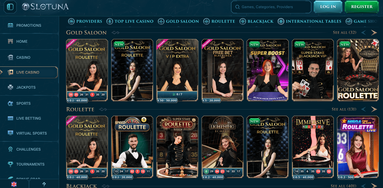
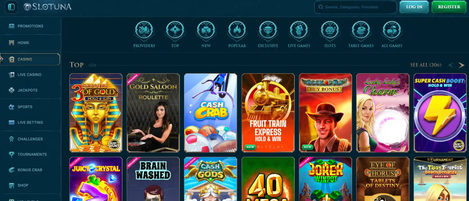
A large catalog is not automatically an advantage. The useful question is another: does it really help you choose based on the time you have, or does it push you to browse too many sections without a clear direction? Many users don't look for hundreds of options. They look for a readable catalog, with understandable categories, and a smooth transition between the lobby, the game screen, and the account.

3 reviews

Imagine logging in at 10:15 PM after a long day. You don't want to explore the entire catalog. You want to find something that makes sense for a short session, understand how your balance is moving, and exit frictionlessly. In such a case, quality doesn't depend on the number of titles. It depends on how the platform gets you where you need to go without losing your concentration.

The pace you choose before starting also matters a lot. If you already know you want to stay for twenty or thirty minutes, you'll look at the catalog with different eyes. You're not chasing random stimuli; you're looking for an experience consistent with the time you have. This changes a lot because the session stops being a confused race and becomes a concrete test of the service.

Many more mature users do well precisely because of this: they set a duration before choosing a game. They don't log in to 'see how it goes,' but with a clear minimum objective. In an online gaming environment, this small discipline makes the account much more readable.

How to Choose Your First Game Without Getting Lost

For a first try, it makes sense to start with a game with immediate rules and a readable pace. Not because it's the only valid choice, but because it leaves room to observe the rest: balance, lobby comfort, fluidity of transitions, and clarity of history. Imagine wanting to understand how the account behaves rather than seeking a long stay. In that case, a simple choice is often the best.

Knowing When to Stop Matters More Than Continuing

There comes a point when continuing doesn't add useful information. This often happens after the first half-hour, when you've already understood how the profile works, how the balance moves, and how clear the lobby is. Imagine you only logged in to test the service. Staying longer out of inertia won't make the evaluation more precise. Leaving on time, however, leaves you with a clearer, less distorted impression due to habit.

Cashier, Deposits, and Reading Transactions

The cashier is the point where a platform stops seeming just well-built and starts proving if it can truly guide the user. It's not enough to find a button to deposit funds or see the balance at the top. You need to understand how to read transactions, where notifications appear, if there's an easy-to-consult history, and how clear the operation summary is.

Imagine you've just finished a short session and want to understand precisely what happened. You open the history and look for order: balance entry, any recent transactions, open requests, operation status. This is where a serious evaluation begins. Not when everything seems simple, but when you need to calmly reread what you've done.

Many cautious users observe the cashier even before actually using it. They open it, read the main items, look for history, notifications, and support. It's a small habit, but it helps a lot. When it's time to act, you're not learning everything from scratch under pressure. You're using a space you've already familiarized yourself with.

Even the first deposit should be treated this way. Not as a hasty click, but as a step to be included in an ordered sequence: profile checked, personal limit already decided, cashier calmly reviewed, method chosen without rush. This reduces the risk of wrong expectations and unnecessary doubts later on.

Element to Check

Why It's Useful

Profile Data

Reduces inconsistencies between account and operations

Cronologia Movimenti

Aiuta a ricostruire ciò che è successo

Stato Delle Richieste

Shows if a step is open or completed

Personal Limits

Keeps the budget within a pre-chosen threshold

Notifiche Del Sistema

Segnala se manca un’azione da completare

Area Assistenza

Needed when a doubt requires a precise answer

Account Verification and Steps Not to Postpone

Profile verification is one of those phases that many users tend to postpone. Initially, it seems secondary. Then, when you want to perform an important operation or clarify a transaction, it suddenly becomes urgent. Therefore, it makes more sense to tackle it early, when your mind is clear and there's no rush to close a session or move funds.

Imagine having fifteen free minutes in the afternoon. It's a much better time to sort out your profile than in the evening, when you're already in a session and just want to get on with it. Those who proceed methodically usually check in advance if their account is complete, if the data matches, and if the personal section leaves no grey areas. This approach greatly reduces slowdowns at inconvenient times.

There's also a psychological aspect that weighs in. When verification is done calmly, the account seems clearer and less opaque. When it's postponed, every little system message feels heavier. That's why many experienced users treat verification not as a formality, but as a normal part of daily service use.

The Right Time To Sort Everything Out

The right time is before the rush, not during. If you know you want to use your account over the weekend, it makes sense to sort out the details in advance, perhaps during a quiet moment of the day. Imagine arriving in the evening with your profile already tidy, including notifications, and a clear history. Everything else will seem simpler because your account won't demand your attention precisely when you just want to use it.

Mobile, Browser, and Experience Continuity

In 2026, a significant part of the experience will be through the phone. Not because mobile always replaces every other device, but because a vast number of accesses start right there: checking the balance, quick account verification, short sessions, reading a notification. Therefore, the service should also be observed in its ability to remain consistent between the phone and a larger screen.

Imagine using the computer for registration and checking the cash register, then the phone for quick checks during the day. This is a very common and often sensible strategy. However, it only works if the account maintains the same logic: recognizable menus, easily accessible history, always visible balance, personal area reachable without constantly rethinking the path.

The phone, in particular, requires more intention. If you enter without knowing what you want to do, you risk moving from one section to another out of inertia. If, however, you enter with a specific purpose, mobile becomes truly useful. This is where the difference between impulsive and orderly use of your account becomes apparent.

Many users do well to divide tasks. Desktop for reading, verifying, sorting out the profile, and checking the cash register. Mobile for quick access, balance, notifications, and short sessions. It's not a mandatory rule, but it's often the simplest way to reduce errors and dispersion.

When the Phone Truly Helps

The phone helps when you already know what you want to do. Log in, check a transaction, check the balance, read a notification, and log out. It becomes less convenient when you need to interpret a lot of information or make decisions that require full attention. Think of two different moments: in the first, you have five minutes; in the second, you need to calmly read a section of your account. In the first case, mobile is sufficient. In the second, a larger screen might be the better choice.

Why Continuity Between Devices is Important

If every access from a different device forces you to relearn the account, the experience becomes cumbersome. Imagine logging in from your desktop in the morning and from your phone in the evening. If the logic changes too much, you always feel like you're on your first day. If, however, everything remains consistent, the platform stops feeling like an environment to be interpreted and becomes an environment you truly know how to use.

Support, Limits, and Responsible Use

Support is most important when something gets stuck at a specific point. A notification you don't understand, a history that doesn't convince you, an unclear cash register entry, or a doubt about your profile. In these cases, you don't need to write a lot. You need to write well. The more precise your message, the more precise the response can be.

Imagine being in a section of your account and not understanding if a step is truly complete. Simply writing that something isn't working is of little use. It's much more helpful to indicate the device, time, screen, and message displayed. Serious support works better when it receives readable details and not just frustration.

Alongside support, personal limits are very important. Deposit limits, timeouts, self-exclusion, and session reminders are not tools to be sought only when the session has already gotten out of hand. They should be identified beforehand, when the mind is cooler. A well-used platform doesn't just help you log in. It also helps you stop.

Think of an evening when you planned half an hour of gaming and find yourself still connected an hour later for no specific reason. At that moment, the break becomes a tool, not a sacrifice. If your account makes these tools visible, it's truly helping you manage your pace like an adult.

Final Balance for Users in Italy

To judge Slotuna in 2026 seriously, it's not enough to look at the surface. You need to observe the entire journey: registration, profile clarity, cash register readability, history quality, mobile behavior, continuity between devices, support, and responsible tools. If these elements fit together, the account can be much more solid than a first impression suggests. If, however, one of them causes constant friction, it's right to notice it early.

Imagine a concrete test. Log in, sort out your profile, check your transactions, have a short session, and then log out. If you can reconstruct everything afterwards without difficulty, the service has done its job well. If, however, each step seems to force you to guess what to do next, that feeling should be heeded.

For those accessing from Italy, the criterion remains very practical: use in compliance with applicable rules, access reserved for adults, attention to time and budget, readable account, and visible tools to maintain control. A valid platform doesn't overwhelm you. It always leaves you with the feeling that you know where you are, what you are doing, and when it makes sense to stop.

FAQ

The most useful way is to treat the first access as a technical test, not a full session. Log in, check your profile, cash register, history, and pause tools. Imagine using the first few minutes just to orient yourself. If you find everything easily and without effort, the signal is good. If, however, every important function seems hidden, it's wise to remain cautious and observe more closely before actually using the account.

It's advisable to do it as soon as the account is active and not when you're already in a hurry to do something else. Many postpone it because they want to enter the lobby immediately or check their balance, but then find themselves sorting out data and notifications at the most inconvenient time. An initial check done calmly greatly simplifies everything else.

It depends on what you want to do. For reading settings, sorting out your profile, or carefully checking the cash register, a large screen often helps more. For quick checks and short sessions, the phone can be fine. Many users use a combination of both devices, and this is often the most practical solution.

Before depositing funds, it's advisable to verify that your profile is tidy, that the cash register is readable, and that you have already chosen a personal limit for your session. Imagine wanting to do everything in a few minutes after a long day. If you skip these steps, haste will make you think simple what actually needs to be read with more attention.

First, it is advisable to check the history, notifications, and operation status. Then it is useful to verify if a step related to the profile or security is missing. The least useful thing is to repeat the same action several times immediately. If the doubt remains, contact support with a precise description of the device, time, and screen involved.

Because they work much better when chosen with a cool head. If you wait until you are already in the session, you are trying to correct the pace while the pace has already started. Think about an evening when you only want to be online for a short time. A predefined threshold helps you maintain control much more easily.

They matter, but not enough to replace personal verification. A useful comment guides you, it doesn't decide for you. If you read concrete reports with real steps and details, you can get a lot out of them. If, on the other hand, you only focus on absolute judgments, you risk absorbing the tone of the writer without understanding whether that problem or advantage would really apply to your way of using the platform.